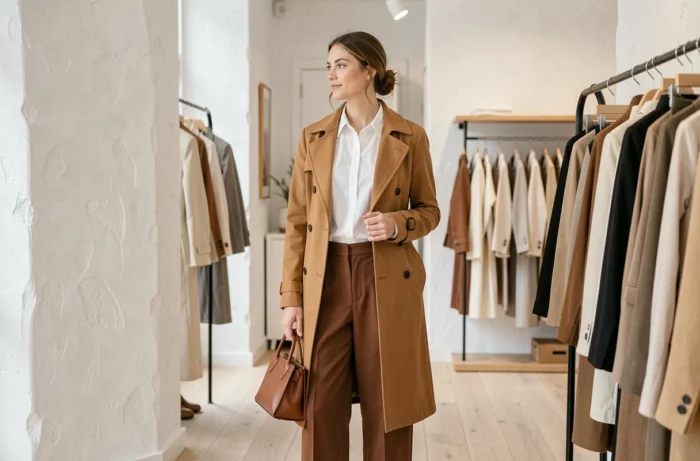
A report published in March 2026 by Vestiaire Collective reveals that 72% of respondents own more than 100 pieces in their wardrobes, while one in three claims to feel like they have nothing to wear each week. This gap between volume and satisfaction raises a measurable question: what concrete levers can transform an oversized wardrobe into a functional daily closet?
Usage thresholds by type of clothing: data from the Vestiaire Collective report
The report proposes minimum usage thresholds for a garment to offset its carbon footprint. These figures provide a direct framework for assessing the coherence of a wardrobe.
| Type of garment | Recommended minimum number of wears |
|---|---|
| Shirts and blouses | 40 |
| Pants, dresses, skirts | 70 |
| Sweaters and sweatshirts | 85 |
| Jackets and coats | 100 |
The difference between a shirt (40 wears) and a coat (100 wears) reflects a simple principle: the more a piece costs in resources, the longer it should be worn. This scale allows for a quick sorting of garments that deserve to remain in a daily wardrobe.
Sixty years ago, a wardrobe averaged around 40 garments. Today, 47% of people own more than 200 pieces. When compared to the thresholds above, the calculation is quick: wearing 200 pieces often enough to amortize them would require changing outfits several times a day, which makes no practical sense.
By cross-referencing this data, it is possible to discover fashion on Valimero Fashion Addict while applying a realistic usage filter to each new coveted piece.
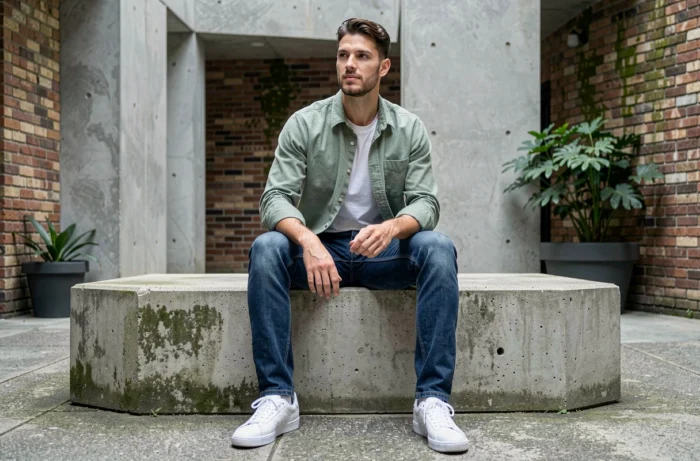
Trendy colors for 2026 and their impact on wardrobe versatility
The dominant palettes of 2026 are organized around bold shades: lavender, glacier blue, yellow, pink, and purple. These colors replace the neutral tones that have dominated previous seasons.
Lavender appears in flowing dresses, satin shorts, and handbags. Glacier blue is seen on coats, sweaters, and accessories. These two shades share a useful characteristic: they easily combine with dark or light basics.
In contrast, bright colors like yellow or vivid purple pose a versatility problem. A bright yellow piece worn twice a week reaches 100 wears in a year. A bold-colored piece must be worn frequently to justify its place in a rational wardrobe. If you like purple but would only wear it occasionally, the Vestiaire Collective report suggests limiting it to accessories rather than key pieces.
Eco-friendly materials and color choices
The same report indicates that eco-friendly materials (organic cotton, local linen, recycled fibers) are now widely integrated into collections without a price explosion. This changes the game for trendy colors: a lavender dress made from recycled linen bought at a price comparable to that of classic polyester no longer requires a compromise between style and durability.
Eco-friendly materials make bright colors more accessible without significant extra cost, facilitating the integration of colorful pieces into a daily rotation.
Bold silhouettes and tactile materials: what runways translate into real usage
The autumn-winter 2026 trends highlight several simultaneous stylistic directions: chic workwear, transparency and lace, reimagined streetwear, and unapologetic maximalism. This diversity complicates the reading for those looking to refresh their style without accumulating.
Chic workwear relies on structured pieces (shoulder-padded jackets, straight pants, oversized shirts) that can be worn in both professional and casual contexts. These are typically garments with high amortization potential, capable of reaching the recommended 70 to 100 wears.
Conversely, the transparency and lace trend generates more contextual pieces, reserved for specific occasions. The actual wear rate of a transparent piece remains low for most daily lifestyles.
- High daily rotation pieces: workwear jackets, straight organic cotton pants, recycled knit sweaters, these garments easily reach the recommended usage thresholds
- Moderate rotation pieces: colorful dresses in lavender or glacier blue, wearable at the office as well as in the evening, provided they are integrated into at least two different contexts
- Low rotation pieces: transparent tops, highly stylized maximalist accessories, which risk remaining in the closet for most of the year
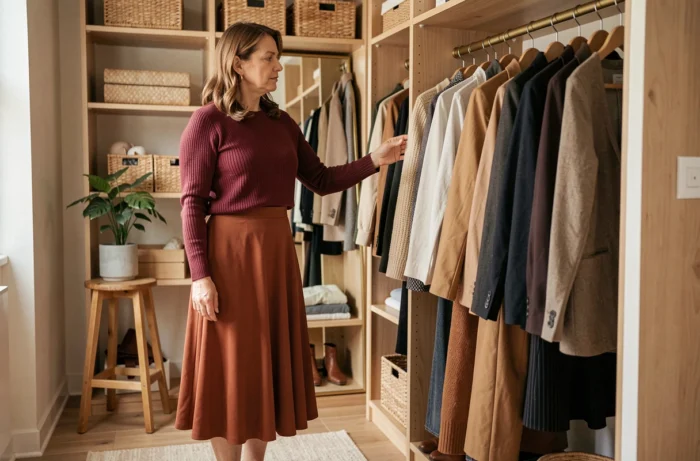
The role of accessories in the perception of renewal
Brooches are making a documented comeback in the 2026 collections. A brooch worn on a basic jacket changes the perception of an outfit without adding volume to the wardrobe. It is a low-bulk lever for stylistic renewal.
A rotating accessory produces more variations than an additional garment. Three brooches combined with five jackets generate fifteen distinct visual combinations, whereas five additional jackets would only exacerbate the over-equipment problem.
Building a coherent daily wardrobe: the equation of volume and frequency
The Vestiaire Collective report formulates a simple equation: frequency of use multiplied by wardrobe volume. If the result exceeds what your weeks realistically allow, the wardrobe is oversized.
- Count the number of pieces actually worn over the past month and compare it to the total owned
- Identify garments that have not reached half of their amortization threshold after a year
- Redirect purchases towards versatile pieces capable of functioning in at least three contexts (office, weekend, outing)
The 2026 trends offer options compatible with this logic. Chic workwear and colors like glacier blue or lavender lend themselves to multiple uses. Reducing the number of pieces while increasing their frequency of wear remains the most effective lever for reinventing a wardrobe style without accumulation.
The gap between overflowing wardrobes and the feeling of having nothing to wear is not resolved by adding more clothes. It is resolved by wearing more of what is already there and only buying pieces capable of reaching their usage thresholds.