
A dog that scratches constantly, loses patches of fur, or develops red skin for no apparent reason: it’s a familiar sight for many owners. Choosing the right food for a dog prone to skin problems and itching means understanding what is really happening in their bowl. Food directly affects the skin barrier, and the wrong ingredients can keep irritation going for months.
Elimination diet: the only reliable method before changing your dog’s food
Before looking for the best brand, you need a diagnosis. Many owners switch foods hoping for an improvement, notice their dog seems more comfortable, and conclude that the problem is solved. But this approach has a catch.
Veterinary recommendations are clear: changing your dog’s food without a complete elimination diet proves nothing. The standard protocol is to feed your dog a diet containing a single protein source they have never eaten before, for several weeks. If the itching subsides, the old food is reintroduced. If the symptoms return, this confirms a food allergy.
Blood or saliva tests marketed for identifying food allergens are not reliable for this diagnosis. Only an elimination diet followed by reintroduction can provide a definitive answer.
One often-overlooked detail: treats, chew bones, table scraps, and even some flavored supplements can skew the results. Throughout the diet, only the elimination diet food should go in your dog’s bowl. If you’re looking for dog food for sensitive skin and itching, this preliminary step can save you months of unnecessary trial and error.
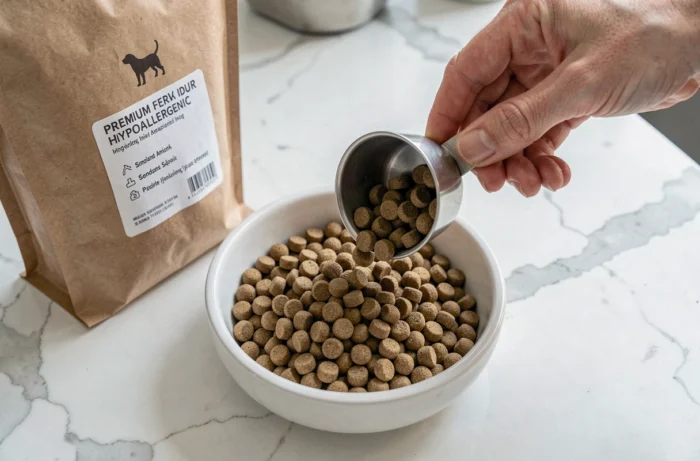
Proteins and allergens: what standard dog food really contains
Have you noticed that most standard dog foods use chicken, beef, or wheat? These are precisely the proteins most commonly implicated in dogs’ skin reactions. The immune system reacts to a specific protein, not to a brand or type of food in general.
There are two ways to address this problem:
- Food made with a single, novel protein (duck, white fish, insect, venison): this reduces the risk of a reaction by offering a protein source your dog has never encountered.
- Hydrolyzed-protein food: the proteins are broken down into such tiny fragments that the immune system no longer recognizes them as allergens. Veterinarians often prescribe this type of formula during an elimination diet.
- Grain-free food: this removes wheat, corn, and barley, but bear in mind that going grain-free is not enough if the animal protein is still a problem. A dog allergic to chicken will react to grain-free food that contains chicken.
So the assumption that “grain-free = hypoallergenic” is misleading. Animal protein triggers most skin reactions, not carbohydrates.
Fatty acids and the skin barrier: nutrients that make a difference
Beyond the choice of protein, fatty acid content directly affects skin health. Omega-3s (primarily from fish oil) and omega-6s (linoleic acid, found in vegetable oils) help build the skin barrier.
In practical terms, a dog whose diet is low in fatty acids will have drier skin that is more permeable to external irritants and more prone to inflammation. Omega-3s have a measurable anti-inflammatory effect on the skin.
When reading a dog food label, look for:
- Fish oil (salmon, herring, sardine) among the first ingredients, indicating a significant supply of long-chain omega-3s.
- An omega-6 to omega-3 ratio that is not too unbalanced. Many standard dog foods contain excessive omega-6s relative to omega-3s, which can promote inflammation rather than reduce it.
- Zinc and biotin, two nutrients involved in skin cell renewal and coat health.

Hypoallergenic and dermatological dog food: what’s the difference?
These two terms come up often, but they don’t mean the same thing. So-called hypoallergenic food is designed to limit the number of potential allergens. It contains one or two protein sources and avoids ingredients commonly associated with reactions.
Dermatological food goes a step further: it contains higher levels of fatty acids, zinc, and B vitamins to actively support the skin barrier. It is generally available by veterinary prescription and designed to complement medical treatment.
Hypoallergenic food is not necessarily dermatological, and vice versa. A dog whose itching is caused by a chicken allergy needs a different protein. A dog with atopic dermatitis, whose skin is inherently fragile, is more likely to benefit from a formula enriched with skin-supporting nutrients, even if protein is not the cause.
When to see a veterinarian instead of changing your dog’s food
If the itching persists after eight weeks on a strict elimination diet, the problem is probably not food-related. Atopic dermatitis, parasites (fleas, mites), or secondary infections require a diagnosis and medical treatment. Changing your dog’s food is no substitute for a veterinary consultation when symptoms are chronic or severe.
A dull coat, itching around the ears, paws, or belly, and recurring ear infections: these signs may point to a food allergy, but they can also be caused by other conditions with similar symptoms. An elimination diet remains the best way to narrow down the cause, provided it is followed rigorously and the results are interpreted with a professional.