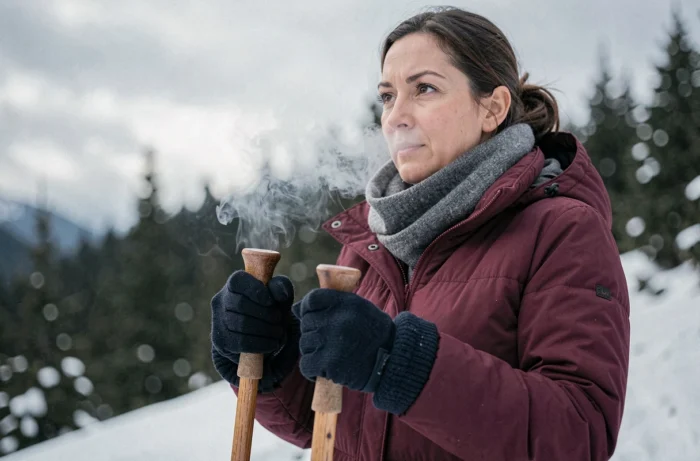
On a morning when the temperature is five degrees below zero, you pull on your gloves and, twenty minutes later, your fingers are already numb. The problem rarely comes down to temperature alone: it’s often a poor balance between insulation, waterproofing and the type of exposure to cold. Choosing high-performance winter gloves means understanding the kind of cold you’ll actually face and matching the gloves to your specific needs, rather than simply going for the “warmest” pair on the shelf.
EN 511 standard: what the labels tell you (and what they don’t) about cold protection
Most technical gloves display an EN 511 code, but this code isn’t an overall warmth rating. It consists of three separate indicators: convective cold (cold air circulating around the hand), contact cold (handling a metal object or frozen surface) and water penetration.
A high score in one category guarantees nothing about the other two. A glove that performs very well in convective cold may let moisture through or provide poor insulation when handling a steel bar. In practice, choose your gloves by first identifying the conditions you’ll actually face.
- Prolonged exposure to cold air (walking, waiting outdoors, cross-country skiing): prioritize the convective cold rating and a thick lining
- Handling cold objects (construction sites, logistics, cold-storage warehouses): check the contact cold rating, which is often overlooked
- Wet conditions (freezing rain, slush, urban cycling): check resistance to water penetration as well as insulation
This standard doesn’t specify a comfort temperature. When looking for gloves for cold weather, comparing two models based solely on their “warmth level” often leads to the wrong purchase. It’s better to consider the EN 511 code alongside the insulation details and real-world reviews.
Insulation, lining and moisture: the everyday factors that make all the difference
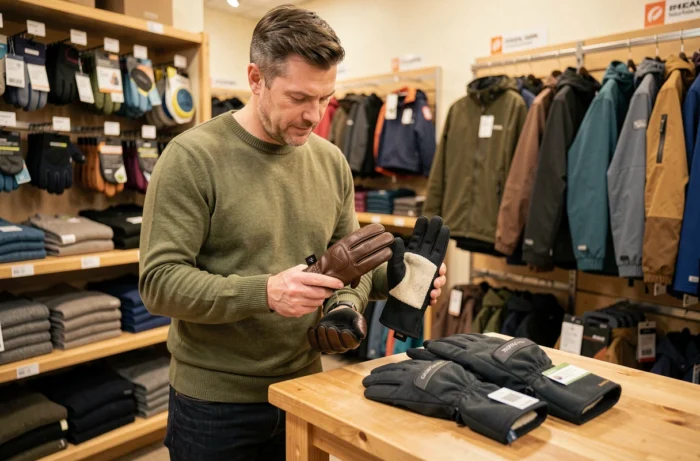
The insulation determines how well the glove traps warm air. There are two main types: synthetic insulation (such as Thinsulate or PrimaLoft) and natural linings (merino wool, down). Synthetics retain their insulating properties even when wet. Natural linings offer superior warmth when dry, but some gloves lose their insulating properties as soon as they get damp.
For everyday use in the city or on hikes, perspiration is often underestimated. A very warm glove without a breathable membrane can trap moisture inside, cooling your fingers faster than the cold air outside. Leather, often recommended for its durability, needs regular waterproofing treatment or it can become porous after just a few weeks of intensive use.
Mittens or five-finger gloves: a practical choice, not an aesthetic one
Mittens keep your fingers together in a single compartment, reducing the surface area through which heat can escape. For prolonged periods of stationary exposure (ice fishing, mountain observation), they consistently outperform five-finger gloves for warmth alone. However, they sacrifice dexterity.
The most effective compromise is a three-finger glove (with the index finger separate and the other three grouped together), which preserves your ability to grip while limiting heat loss. These are most commonly used for alpine skiing and mountaineering.
Raynaud’s syndrome: when gloves alone aren’t enough
Raynaud’s syndrome causes spasms in the small arteries of the fingers, which turn white and then blue when exposed to cold. For people affected by the condition, even high-end gloves won’t prevent attacks, because the problem is vascular, not just temperature-related.
Several complementary measures are recommended by Assurance Maladie and the NHS:
- Keep your whole body warm (torso, head, feet), as overall cooling triggers vasoconstriction in the extremities
- Choose mittens over gloves with separate fingers to retain more heat
- Warm your hands gradually during an attack, without exposing them to a direct heat source (radiator, very hot water)
- See a doctor if attacks are accompanied by sores, ulcers or persistent pain
Heated gloves can relieve symptoms, but they don’t treat the underlying cause. Their built-in heating elements provide useful extra warmth, provided you keep an eye on battery life and don’t rely on them as your only solution. Medical follow-up remains essential for severe or secondary forms of the syndrome.
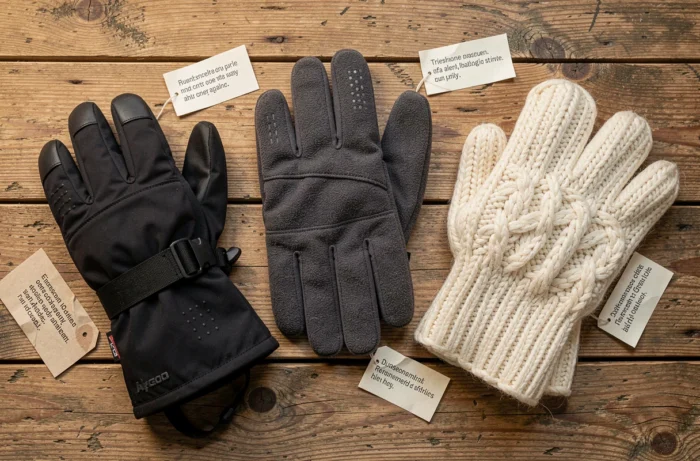
Winter gloves for specific activities: skiing, motorcycling and construction
Your hands need different protection on a motorcycle and at a construction site. The conditions of use create requirements that can conflict with one another.
Skiing and snowboarding
Ski gloves combine insulation, waterproofing and abrasion resistance. A good pair has a waterproof membrane (such as Gore-Tex), reinforced palms and long cuffs that fit over your sleeves. Leather remains the most durable material for the palm, provided you wax it regularly.
Motorcycling in winter
Motorcyclists’ hands are exposed directly to the oncoming airflow. Winter motorcycle gloves need to block the wind first and provide insulation second. Models with an integrated windproof membrane outperform gloves that are simply lined. For daily rides below freezing, rechargeable heated gloves help prevent numbness that can compromise braking and clutch control.
Outdoor work
On a construction site, dexterity comes first. Gloves that are too thick make it difficult to handle screws or grip tools properly. Nitrile gloves with a thermal lining offer a good compromise: the contact cold rating (EN 511) is the deciding factor here, far more so than convective insulation.
Whatever the activity, an effective winter glove is about more than thickness. The combination of insulation type, moisture management and suitability for the actual cold conditions is what makes the difference between numb fingers after twenty minutes and protection that lasts all day.