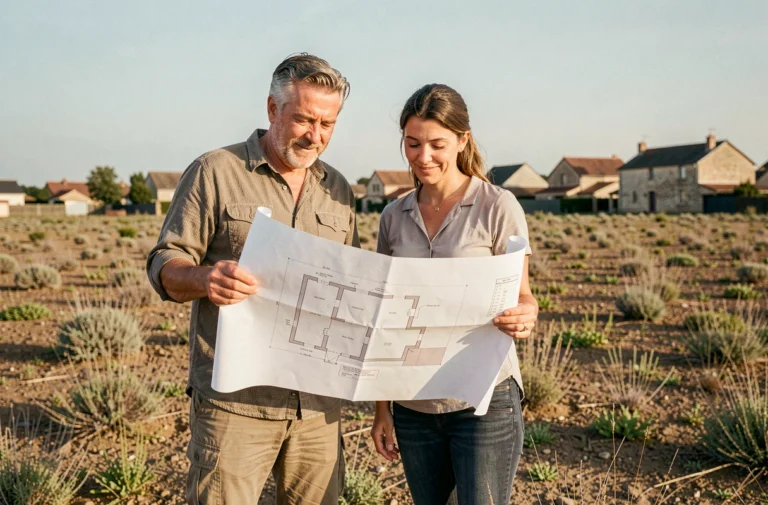
Starting a business as a woman in France in 2026 is no longer an exception. Women account for nearly 39% of business creations according to the 2026 barometer from the General Directorate of Enterprises and Bpifrance. However, there remains a gap between the desire to start a business and taking action: they represent only 29% of the entrepreneurial chain, from the initial project to the actual creation. Knowing where to find the right resources changes the game.
The gap between intention and creation: what recent figures show
Have you ever considered starting out without knowing where to begin? This gap between desire and action particularly affects women entrepreneurs. The 2026 barometer cited by Business of Féminin confirms it: the intention to start a business far exceeds the actual creation rate.
Several barriers explain this disconnect. Access to funding remains a tough point. Businesses founded by women still capture a marginal share of venture capital in 2026. It’s not a problem of skills or motivation; it’s a structural issue related to the funding circuits themselves.
The other, less visible barrier concerns access to reliable and centralized information. Legal status, regional aids, support mechanisms, professional networks: resources exist, but they are scattered across dozens of sites. Consulting all the pages of J’entreprends Au Féminin allows you to map these resources from a single entry point, organized by theme.

Funding and female entrepreneurship: the mechanisms to know
Funding is often the first wall. Before seeking investors, it’s important to distinguish between two very different situations: launching a service micro-enterprise (where the capital requirement remains low) and creating a company with inventory, premises, or employees.
Public aids and bank guarantees
Bpifrance is involved in honor loan schemes, accessible to female business creators. Each region has its own aids, often unknown. Inquiring directly with local economic development agencies helps identify programs suited to one’s project.
Venture capital, a circuit still difficult to access
For more ambitious projects that require fundraising, the reality remains complicated. The share of fundraising allocated to female founders remains marginal. Networks of female business angels are developing, but slowly. Knowing these circuits in advance, even before drafting a business plan, can save several months.
Networks of female entrepreneurs: choosing one that matches your stage
Joining a network? Yes. But which one? There are dozens, and not all meet the same needs.
- In the ideation phase: associations like Femmes des Territoires offer a support space among creators, with over 1,500 meetings and workshops per year, in person or online, across about a hundred local branches.
- In the structuring phase: incubators and accelerators dedicated to female entrepreneurs provide more technical support (legal, management, accounting). Some regional programs include mentoring over several months.
- In the growth phase: networks focused on business and funding become relevant. It’s at this stage that the connection with female investors or dedicated funds can make a difference.
The trap would be to multiply memberships without truly utilizing the resources. One well-used network is worth more than five forgotten membership cards.
Key skills for entrepreneurship: beyond the profession
Mastering one’s sector is not enough to run a business. Three blocks of skills consistently appear in the journeys of female entrepreneurs who make it past the first three years.
The first block concerns basic financial management: reading a profit and loss statement, calculating a break-even point, anticipating cash flow. This is not advanced accounting; it’s operational survival.
The second block relates to communication and sales. Many female business creators develop an excellent product or service but struggle with visible performance. Workshops offered by networks of female entrepreneurs often cover this aspect, from pricing strategy to social media strategy.
The third block, less obvious, concerns time and priority management. An entrepreneur wears many hats: production, client relations, administration, prospecting. Without a method, burnout comes quickly. Knowing how to delegate early, even with a limited budget, protects the project.
Professional retraining and female entrepreneurship
A significant portion of women who start their businesses do so as part of a career change. The classic pattern: several years of salaried work, a trigger (layoff, boredom, search for meaning), then an entrepreneurial project often in a sector very different from the previous one.
This transition carries an underestimated advantage. The skills acquired in business (project management, management, client relations) are directly transferable. A former HR manager launching a recruitment consulting firm does not start from scratch. She changes the framework, not the know-how.
The female entrepreneurial journey is not linear. It progresses in fits and starts, between periods of doubt and acceleration. What distinguishes sustainable projects is neither the chosen sector nor the initial investment amount; it’s the ability to surround oneself with the right resources at the right time.