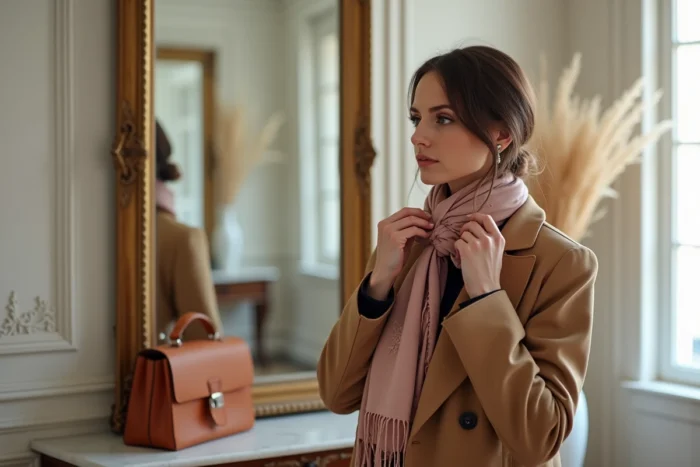
What objective criteria distinguish an accessory that lasts through the season from an impulsive purchase relegated to the back of a drawer by September? Between French regulations on chemical substances in textiles, the introduction of the environmental score, and seasonal style trends, the choice of a fashion accessory now relies on measurable parameters, not just on a whim.
PFAS Regulation and Environmental Score: What Changes for Accessories in 2026
The current season marks a regulatory turning point. Since January 1, 2026, France prohibits textiles containing PFAS beyond residual thresholds. Technical bags, waterproof hats, treated synthetic belts: some accessories commonly sold in previous seasons will be removed from the market or need to be reformulated.
Pieces made entirely of leather are explicitly excluded from this ban. Leather belts, bags, and sandals therefore gain a direct competitive advantage over synthetic alternatives.
At the same time, since October 2025, brands can display an environmental score for textile clothing and accessories, both online and in stores. This score will gradually become a benchmark for consumers, similar to the Nutri-Score in food.
| Criterion | Treated synthetic accessories | Leather or natural material accessories |
|---|---|---|
| PFAS Compliance 2026 | Reformulation required or withdrawal | Excluded from the ban |
| Environmental Score | Variable depending on chemical treatment | Favored if vegetable-tanned or recycled |
| Perceived Durability | Lower without water-repellent treatment | Natural patina, superior longevity |
| Seasonal Trend | Less present on runways | Leather, raffia, linen on the rise |
This table summarizes the positioning gap between two families of accessories. The regulation accelerates a shift already initiated by style trends.
To explore pieces that meet these new composition criteria, the accessories offered by Lydie Tendances cover several categories suited to this transition.

Seasonal Accessory Trends: Natural Materials and Bold Jewelry
The season favors raw materials. Raffia, linen, and cotton dominate collections of bags and hats. These materials, in addition to their regulatory compliance, provide a visible texture that effortlessly structures a summer outfit.
XXL Jewelry and Charm Necklaces
Chunky jewelry establishes itself as the stylistic marker of the season. The idea is to concentrate visual impact on a single strong piece rather than multiplying small discreet accessories.
However, minimalist jewelry does not disappear. It shifts to wrists and ears, leaving the neck for the statement piece.
Oversized Sunglasses and Colorful Frames
Oversized frames with tinted lenses are making a strong comeback this season. Saturated colors (amber, olive green, burgundy) replace classic black or tortoiseshell. The choice of frame influences the face’s silhouette as much as a textile accessory.
Creating a Cohesive Look with a Maximum of Three Accessories
Accumulating accessories dilutes their effect. Three well-chosen pieces are enough to transform a basic outfit into a polished composition. The logic relies on the distribution of volumes and textures.
- A head or neck accessory (raffia hat, linen scarf, charm necklace) that draws the eye upward
- A bag made of natural material whose color matches or contrasts with the outfit’s palette, without ever duplicating the exact shade of a worn garment
- A pair of sunglasses or a belt that defines the silhouette and adds a structuring line
This approach works because it distributes points of interest across three distinct areas. The gaze flows instead of fixating on a single overloaded element.
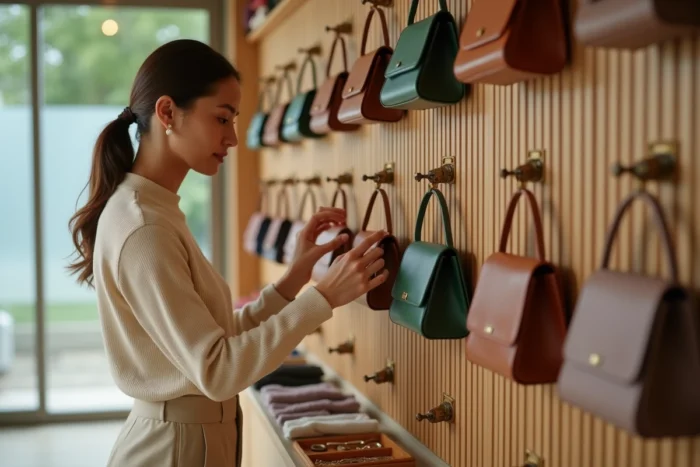
Sustainable Accessories: How to Spot a Piece That Lasts Several Seasons
The durability of an accessory is not limited to its material. It also depends on the quality of the finishes, the strength of the attachments, and the relative neutrality of the design concerning micro-trends.
- Check the seams and attachment points (bag handles, jewelry clasps, glasses hinges): a well-finished product in these areas extends its lifespan by several seasons
- Favor colors that work with at least three existing outfits in your wardrobe, not just with the piece purchased the same day
- Consult the environmental score when displayed: it includes criteria for the product’s physical durability, not just its carbon footprint
- Prefer materials that develop a patina (leather, brass, heavy canvas) over those that visibly degrade after a few uses
An accessory worn regularly for two years costs less per use than a trendy piece abandoned after a month. This simple calculation better guides choices than a fixed budget per category.
The PFAS regulation and the environmental score make these checks simpler than before: compliant pieces now display readable composition information. The regulatory filter does part of the sorting for the consumer, allowing more room to focus on style, colors, and coherence with already rotating outfits.