
Organizing a trip around the world is not just about ticking destinations off a map. The choice of itinerary, the pace of the stages, and the administrative formalities determine the quality of each day spent abroad. A few decisions made in advance can transform a stressful journey into a smooth and memorable experience.
e-visa formalities and health restrictions: what changes for a world tour
Have you already booked your tickets before checking the entry requirements of a country? This reflex can sometimes be costly. Several destinations change their immigration rules without notice, particularly for health reasons.
Canada, for example, is applying entry restrictions until August 2026 for travelers who have recently stayed in the DRC, South Sudan, or Uganda. A valid visa does not guarantee entry into the territory. Checking consular alerts a few days before each departure stage avoids unpleasant surprises at the airport.
The underlying trend is the digitization of formalities. More and more countries are adopting e-visa systems or electronic travel authorizations (ETA). Mauritius is preparing to implement such a system as part of its 2026-2027 budget.
For a multi-country itinerary, the procedures are done online, often several weeks before arrival. Compile practical resources available on 1voyageur.fr and the official websites of each country in a shared table to track the evolution of formalities throughout the preparation.
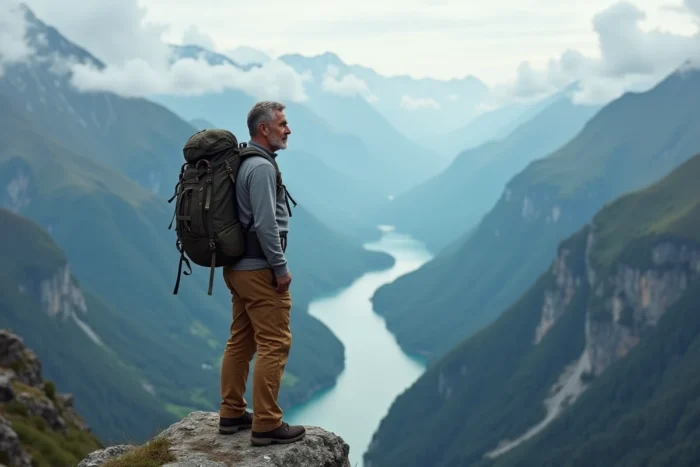
World tour itinerary: building a realistic route
The classic temptation is to stack as many destinations as possible. The result: exhausting transits, too short layovers, and the feeling of having skimmed over each place without retaining anything.
The trap of the number of countries
An itinerary that chains together twelve countries in six months leaves on average only a few days per stage, including transport. Three or four well-chosen destinations are worth more than ten skimmed over. Prioritizing the depth of a stay allows you to go beyond the tourist surface of a place.
This approach aligns with a documented trend for 2026: the rise of slow travel. Euronews in French highlights a return to nature, calm, and off-the-beaten-path places, with stays focused on memories rather than accumulating stamps in the passport.
Choosing a direction of travel
Why does this choice matter? Traveling from east to west lengthens the days and mitigates jet lag at each stage. The opposite compresses the days and often leads to cumulative fatigue. If your departure is from Europe, a route to Southeast Asia, then Oceania, then the Americas follows the logic of east to west.
The direction of travel also determines the price of round-the-world tickets. Airline alliances offer fares that vary according to direction and the number of layovers. Comparing both directions before purchasing can represent significant savings.
World tour budget: balancing fixed and variable costs
The budget often scares people, unjustly. The difficulty is not in finding a total amount, but in knowing where the money actually goes.
- International transport: multi-destination plane tickets are the most predictable expense. A round-the-world ticket sold by an airline alliance sets a price in advance, limiting surprises.
- Accommodation and daily life: this expense varies from simple to tenfold depending on the countries. A night in Southeast Asia and a night in Scandinavia are not comparable. Ranking your stages by cost of living allows you to alternate expensive and budget-friendly destinations.
- Unexpected events and health: travel insurance covering repatriation and hospital care is not optional on a multi-month journey. Medical expenses outside Europe can quickly exceed what a traveler can absorb alone.

An unexpected budget, distinct from the main budget, covers changes in plans: missed flights, extended stays, equipment replacement. Planning this margin from the start avoids cutting back on the quality of the final stages.
Off-the-beaten-path destinations: stepping outside typical itineraries
Classic routes (Southeast Asia, Australia, South America) have their merits, but travelers who devote their entire itinerary to them miss out on less frequented regions that are often more financially accessible.
Here are some concrete ideas to diversify an itinerary:
- Include a stop in Eastern Europe or the Caucasus, where local transport and accommodation costs remain moderate, with rich cultural offerings.
- Consider Southern Africa or Central America as alternatives to the flagship destinations of each continent.
- Check seasonality before finalizing dates: arriving in the low season reduces prices and tourist crowds.
This logic of alternative destinations fits into the 2026 trend of emotional travel focused on less frequented places, far from standardized routes.
Duration and travel pace: do not underestimate fatigue
A world tour is not a race. Planning breaks of several days without scheduled activities radically changes the experience. Staying three or four days in the same place without planning anything allows you to discover a neighborhood, talk to locals, and let chance play its part.
The total duration depends on the number of stages and the budget, but also on your resistance to constant mobility. Many long-term travelers describe a fatigue that appears after several weeks of continuous travel. Alternating a week of movement with a few days of rest constitutes a sustainable rhythm over several months.
Each stage benefits from being thought of as a mini self-contained stay, with its own objective: a hike, a culinary immersion, a time for rest. This approach transforms a series of transits into a series of distinct experiences, each with its own flavor.