The global textile market is worth several hundred billion euros and employs millions of workers across all continents. Behind the “Made in” labels, the hierarchies among producing countries are being reshaped by the upscale movement of certain players, environmental pressures, and the logistical choices of brands. Identifying the leading countries requires distinguishing three different registers: gross volume, fabric quality, and technical innovation capacity.
What production volume doesn’t reveal about textile quality
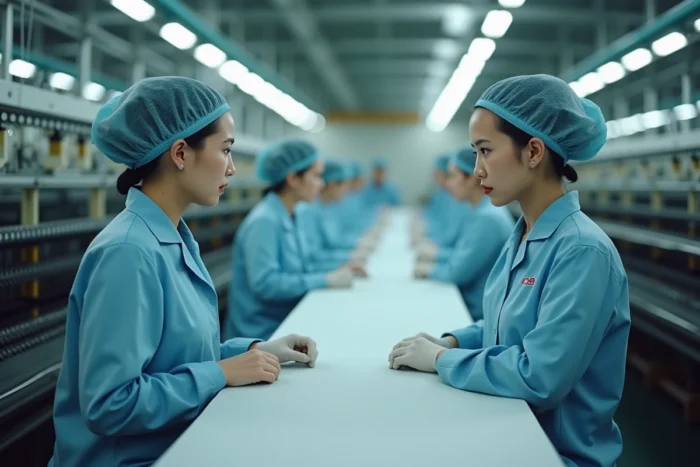
China dominates global clothing and fabric production in volume. Its industrial capacity remains unmatched, driven by advanced automation, an integrated supplier network, and mastery of the entire chain, from fiber to finished product.
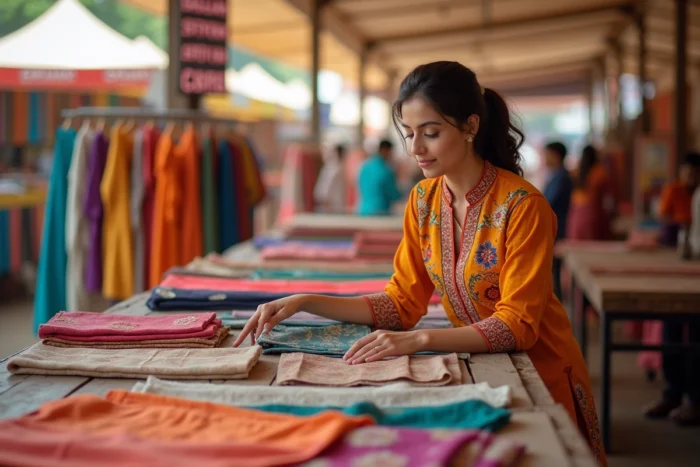
Bangladesh and Vietnam follow, with considerable volumes oriented towards low-cost exports. These two countries provide a massive share of the clothing sold in Europe and North America. India rounds out this leading group thanks to its production of cotton, silks, and technical textiles.
When consulting the textile country ranking, it becomes evident that the hierarchy changes as soon as we sort by fabric quality rather than by tonnage. A leading country in volume is not necessarily a leader in quality. Bangladesh, for example, excels in cost/volume ratio for basic cotton items but is not a reference for high-end fabrics or technical fibers.
High-end textiles: Italy, Portugal, and Japan in a different league
Italy holds a unique position in the global textile industry. The regions of Como (silks), Biella (wools), and Prato (recycled fibers) concentrate expertise that directly feeds luxury houses. Italy remains the reference for fashion and luxury fabrics, with a rare vertical integration: spinning, weaving, finishing, and manufacturing coexist within a limited geographical area.
Portugal has established itself as the most credible European alternative for brands seeking quality and responsiveness. Modernized factories, a skilled workforce, and logistical proximity to the French, Spanish, and German markets explain this rise. The country particularly stands out in knitwear, jersey, and denim.
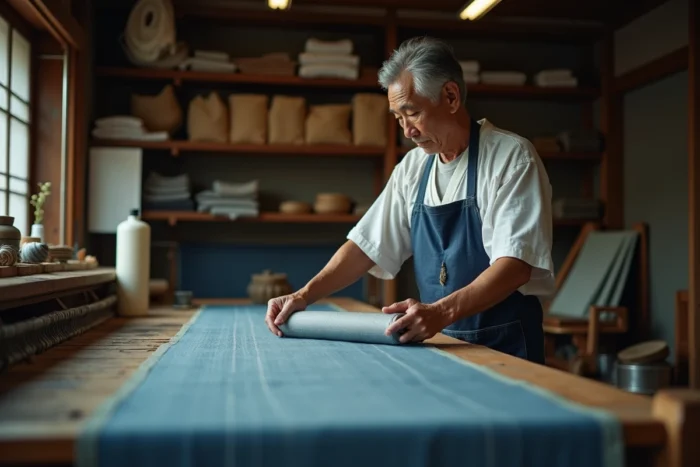
Japan, less frequently mentioned in mainstream rankings, produces some of the most sought-after fabrics in the world:
- Japanese selvedge denim (Okayama, Hiroshima) is considered the best on the market by high-end jean specialists, thanks to old looms and rigorous quality control.
- Japanese technical textiles (waterproof membranes, quick-drying fabrics) supply the sportswear and outdoor industries on a global scale.
- Traditional silks and dyes (Kyoto, Nishijin) perpetuate a textile craftsmanship whose finesse has no industrial equivalent.
These three countries do not compete with China or Bangladesh in volume. Their ranking position is based on the added value per meter of fabric, not on the number of tons exported.
Turkey and intermediate textiles: the pivot between Asia and Europe
Turkey deserves separate analysis. The country has repositioned itself in recent years as a supplier of medium to high-quality textiles for European brands. Its specialization in denim, knits, and technical fabrics allows it to occupy a niche that neither Bangladesh nor Portugal exactly covers.
Geographical proximity to Europe reduces delivery times and the carbon footprint of transportation, an argument that increasingly weighs in sourcing decisions. European brands are beginning to arbitrate between Asian and Turkish suppliers to manage both costs and logistical risks.
Turkey combines lower costs than Portugal with higher quality than Bangladesh. This intermediate positioning makes it a player that is hard to ignore for buyers seeking a compromise between price, quality, and speed.
Technical and low-carbon textiles: where the next hierarchy is determined
The ranking of textile countries is also evolving due to a factor that traditional rankings often overlook: the ability to produce fibers and fabrics with a low environmental footprint.
Europe, which has lost its position as a volume leader in clothing for decades, is making progress in the segment of technical and low-carbon textiles. Germany, Austria (with the Lenzing group, a specialist in cellulosic fibers), and France are investing in manufacturing processes that are less water and energy-intensive.
In Asia, India is developing its capabilities in organic natural fibers, while China is pushing automation and research on recycled synthetic fibers. The available data does not yet allow for ranking these countries on a single environmental indicator, but the trend is clear: sustainability is becoming a criterion of textile competitiveness, not just a marketing argument.
France, for its part, remains a modest player in production but significant in consumption. Customs data show that its main textile suppliers are China, Bangladesh, Italy, Turkey, and Germany, reflecting the diversity of registers (volume, quality, technicality) that French brands seek to combine.
- For volume and basics: China, Bangladesh, Vietnam, India.
- For quality and luxury: Italy, Japan, Portugal.
- For the quality/cost/timing compromise: Turkey.
- For technical and sustainable textiles: Germany, Austria, Japan.
The ranking of the best textiles in the world does not have a single answer. It depends on the criterion chosen: volume, fabric quality, technical innovation, or environmental footprint. Brands that source intelligently combine multiple origins, and it is precisely this diversification that reshapes the global textile map each year.